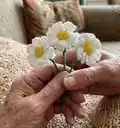
๐Ÿงถ Beautiful โœจ Detailed ๐Ÿ’ Adorable

Daisy & Carnation Flower Bouquet Amigurumi Pattern

Daisy & Carnation Flower Bouquet Amigurumi Pattern
4.3โ˜… Rating
5-7 Hours Time Needed
4.0K Made This
โœ‚๏ธ

Intermediate Level

Ideal for those with basic crochet experience, featuring slightly more advanced stitches and techniques to expand your skills.

โฑ๏ธ

Weekend Treat

Takes 5-7 hours, making it an enjoyable project to finish over a couple of days.

๐ŸŒธ

Cute Companion

An adorable friend to cherish, handcrafted with love to bring comfort and joy for years to come.

About This Daisy & Carnation Flower Bouquet Amigurumi Pattern

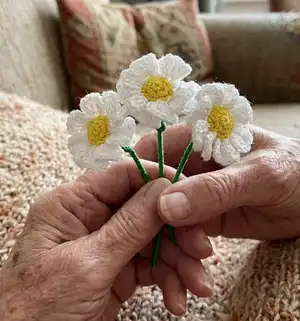
This pattern shows step-by-step how to crochet daisies and carnations along with sepals and a stem for assembling a small bouquet. You will work small round motifs, form ruffled petals, make a tiny central button and attach a sepal and stem. The tutorial uses clear photos and short written steps so you can follow along easily.

Daisy & Carnation Flower Bouquet Amigurumi Pattern crochet pattern - detailed view of completed project

Techniques include magic ring, single crochets, double crochets and simple cluster petals. The pattern includes assembly photos and glue/stem finishing tips for a neat bouquet.

Why You'll Love This Daisy & Carnation Flower Bouquet Amigurumi Pattern

I absolutely love this pattern because it turns simple crochet stitches into delicate, realistic flowers that brighten any space. I enjoy how small motifs like a daisy can be completed quickly yet create a beautiful result when gathered into a bouquet. The step-by-step photos make assembly straightforward and satisfying, and I love that you can customize colors to match any decor. Making these flowers is relaxing and rewarding โ€” each one feels like a small handmade gift.

Daisy & Carnation Flower Bouquet Amigurumi Pattern step 1 - construction progress Daisy & Carnation Flower Bouquet Amigurumi Pattern step 2 - assembly progress Daisy & Carnation Flower Bouquet Amigurumi Pattern step 3 - details and accessories Daisy & Carnation Flower Bouquet Amigurumi Pattern step 4 - final assembly and finishing

Switch Things Up

I love how easy it is to customize color combinations for different seasons โ€” try soft pastels for spring or bold jewel tones for a dramatic bouquet.

To change the size, I often switch yarn weight and hook size; a thicker yarn with a larger hook makes chunkier flowers while thinner thread yields delicate miniatures.

I sometimes replace the glued stem with a wired stem for extra strength and light posability โ€” just wrap the wire with green floral tape or yarn for a neat finish.

Try adding tiny embroidered details or beads to the flower centers for sparkle and texture if you want a more decorative look.

I also make sets of mixed flowers (daisies + carnations) to create contrast โ€” alternating colors across the bouquet makes it pop.

If I want a rustic look, I use natural twine to bind the stems instead of yarn and secure with a dab of glue for a farmhouse style bouquet.

To make keychains, I skip the stem and glue a jump ring to the back of a single flower โ€” instant portable gift or decoration.

I sometimes stitch two petals sets together back-to-back for a fuller bloom; it's a quick trick when you want volume without extra rows.

For durability, I lightly starch the petals before assembly so they keep their shape better; this helps a display bouquet hold up longer.

I like to vary the sepal color โ€” using the same flower color keeps it subtle, while green makes the sepal visible for a natural look.

Common Mistakes & How to Fix Them

โœ— Skipping the magic ring tightening will leave a hole in the center; always tighten the magic ring and check the first stitch alignment. โœ— Not counting your stitches in the first round can change the whole motif size; count after each round and correct mistakes immediately. โœ— Using inconsistent tension makes petals uneven and floppy; maintain even tension and practice the cluster stitches on a scrap first. โœ— Forgetting to trim and hide yarn ends leads to visible tails in the finished flower; fasten off, weave in, or glue ends neatly as you go.

Daisy & Carnation Flower Bouquet Amigurumi Pattern

Create charming crochet daisies and carnations to build a beautiful handmade bouquet. This pattern walks you through the central button, petals, sepals and simple assembly so you can craft realistic tiny flowers. Perfect for gifting, home decor, or a floral project to practice small motifs and assembly.

Intermediate 5-7 Hours

Materials Needed for Daisy & Carnation Flower Bouquet Amigurumi Pattern

โ€” Main Fabric

  • 01
    Yellow cotton thread/ yarn - small amount for the central button (tutorial sample used yellow)
  • 02
    White cotton thread/ yarn - small amount for daisy petals
  • 03
    Green cotton thread/ yarn - small amount for sepals and stems
  • 04
    Purple cotton thread/ yarn - small amount for carnation (shown as an example)
  • 05
    Floral stems or covered wire stems - several pieces for bouquet assembly

โ€” Tools Required

  • 01
    Crochet hook (appropriate for your thread/yarn; images show a small steel hook with a 2.25mm-3.5mm equivalent green-handled hook)
  • 02
    Scissors
  • 03
    Tapestry/yarn needle for sewing and pulling rounds into bundles
  • 04
    Small button for center (used as backing for the button center)
  • 05
    Glue (craft glue or fabric glue) for assembling parts and attaching stem
  • 06
    Optional: pins for holding parts while glue dries

Progress Tracker

0% Complete

โ€” Flower :

Info :

Diagram shows central small round element, petal clusters and final edge round

Info :

Legend: o - magic ring. โ€ข - slip stitch (st). + - single crochet (sc). o - chain (ch). T - double crochet (dc).

โ€” Daisy :

Row 1 :

magic ring

Row 1 :

CH 1, SC 16 in the magic ring

Row 1 :

tighten the magic ring, ST in the first SC

Row 2 :

CH 3 from the first SC. + CH 1. DC 1 in the first SC.

Row 2 :

CH 1. DC 1 in the second SC.

Row 2 :

CH 1. DC 1, CH 1, DC 1 in the third SC.

Row 2 :

DC 1 in the second SC. CH 1. DC 1 in the second SC. CH 1. DC 1, CH 1, DC 1 in the third SC.

Row 2 :

repeat around to form petal clusters as shown in photos and diagram

Row 3 :

repeat (work the edge finishing rounds as in the photo tutorial). ST in the third chain

Row 3 :

CH 3

Info :

Work the series of DC, CH 1, DC clusters around each single crochet to form ruffled petals; follow photos for spacing and finishing.

โ€” Central part of the daisy (yellow button) :

Row 1 :

CH 1, SC 8 in the magic ring

Row 1 :

tighten the magic ring, ST in the first SC

Row 2 :

SC 16 (work increases: SC 2 in each stitch around)

Row 3 :

SC 8 (forming the small round shape)

Row 3 :

CH 1, SC 2 in the first SC

Row 3 :

CH 1, SC 1 in the first SC

Row 3 :

repeat, SC 2 in each SC as shown in the photo sequence

Info :

ST in the first SC. Skip the second SC, SC 1 in the third SC. Skip the fourth SC, SC 1 in the fifth SC, repeat to produce a decorative spaced effect.

Info :

get button. Fasten and trim the edges of the yarn. Apply glue to the back of the button and glue the button in the center of the flower.

โ€” The central part of the flower (green backing / sepal) :

Info :

The central part of the flower (green) is worked in rounds as a small disk to glue behind the flower and over a stem.

Row 1 :

magic ring

Row 1 :

CH 1, SC 8 in the magic ring

Row 1 :

tighten the magic ring, ST in the first SC

Row 2 :

SC 16 (CH 1, SC 2 in the first SC)

Row 3 :

SC 8 (CH 1, SC 1 in the first SC)

Row 3 :

repeat, SC 2 in each SC

Row 3 :

ST in the first SC

Info :

CH 1, SC 1 in the first SC. Skip the second SC, SC 1 in the third SC. Skip the fourth SC, SC 1 in the fifth SC, repeat around to create points for the sepal.

Info :

get button. Fasten and trim the edges of the yarn. Fasten and trim the edges of the yarn of the sepal piece as shown in photos.

โ€” Carnation :

Info :

The carnation is made in the same way as the previous flower - daisy. For daisy the first row began with CH 16.

Info :

For carnation make CH 20 in the first row to start a larger round (CH 20 is used instead of CH 16).

Row 1 :

CH 20, work round as for the daisy but with initial CH 20 and follow the same two next rounds to create ruffled carnation petals

Info :

Make the next two rows in the same way as you did the daisy, then pull the round element into a bundle with a needle and yarn to form the ruffled carnation center.

Info :

Pass the needle with yarn behind the DC of the second row as follows: pass the needle under the bottom of the first DC, pass the needle above the second DC, pass the needle under the bottom of the next DC, pass the needle above the next DC; continue the entire row to the starting point.

Info :

Pull the yarn by two edges and tie a knot, fasten and trim the edges of the yarn. Open the flower, apply glue inside and close, pressing with your fingers until the glue hardens.

โ€” Assembly :

Info :

Glue the button in the center of the flower. For a daisy, make the sepal the same color as the flower if you want the green sepal not to show through.

Info :

Apply glue to the edge of the stem, put the stem into the hole of the flower and wait for hardening. Put the sepal on the stem, apply glue to the sepal and glue to the flower.

Info :

Apply glue to the narrower edge of the leaf and glue it to the stem. For the bouquet group multiple finished flowers, align edges of stems and wind yarn around the bundle; fasten the edges of yarn with glue.

Assembly Instructions

  • Glue the small yellow center (button) into the hole at the center of the ruffled petal unit using craft glue, pressing until it adheres securely.
  • Apply glue to the edge of the stem and insert the stem into the hole of the flower, then wait for the glue to harden before proceeding.
  • Slide the sepal onto the stem over the glued stem interface and apply glue to the sepal edge to glue it to the flower base for a neat finish.
  • Apply glue to the narrower edge of the leaf and attach it to the stem, pressing until secure.
  • Collect all finished flowers, align the edges of the stems and wind a sufficient amount of yarn around the bundle to form the bouquet handle, then secure with glue.
  • Trim any visible yarn tails and tidy glue spots; allow glue to fully dry before arranging or gifting the bouquet.

Important Notes

  • ๐Ÿ’กUse a stitch marker to mark the beginning of each round so you can count rounds and place clusters accurately.
  • ๐Ÿ’กTighten the magic ring before joining the first stitch to avoid gaps, and check the first stitch alignment before continuing.
  • ๐Ÿ’กWork petals and ruffles with consistent tension to produce even frills; practice the DC cluster on a scrap if needed.
  • ๐Ÿ’กAllow glue to dry fully between assembly steps to avoid shifting pieces and to ensure a neat finished bouquet.

This pattern helps you make small beautiful crochet flowers you can gather into a charming bouquet. ๐Ÿงถ Each motif is quick to make and easy to customize with colors and petals. ๐ŸŒผ Make a whole bunch and give them as a lasting handmade gift โ€” they never wilt! ๐ŸŽ

You ask,

we answer.

FAQs

What size will the finished flower be?

The finished daisy measures approximately a few centimeters across when made with thin cotton thread and a small hook; carnation is slightly larger when starting with CH 20.

Can I use different yarn weights for this pattern?

Yes, you can use different yarn weights but it will change the finished size and texture; use an appropriate hook for the yarn and expect larger or bulkier flowers with thicker yarn.

Do I need special tools to assemble the bouquet?

No special tools beyond basic crochet supplies are required; a yarn needle, glue, scissors and floral stems (or covered wire) are used to assemble flowers and stems.

How long does it take to make one flower?

Most crocheters complete a single daisy or carnation component in 10-30 minutes depending on experience and yarn choice; assembling a full bouquet will take several hours.

Is this pattern suitable for beginners?

This pattern is rated intermediate since it uses small rounds, clusters and assembly with glue; confident beginners can follow the photo steps but should be comfortable with DC and SC.