🧶 Beautiful ✨ Detailed 💝 Adorable

Winter fairytail Crochet Pattern

Winter fairytail Crochet Pattern
4.0★ Rating
5-7 Hours Time Needed
2.6K Made This
✂️

Beginner Friendly Level

Perfect for those just starting their crochet journey, with clear instructions and simple techniques

⏱️

Weekend Treat

Takes 5-7 hours, making it an enjoyable project to finish over a couple of days.

Stylish Touch

An elegant detail to elevate any look, combining traditional techniques with contemporary design sensibilities.

About This Winter fairytail Crochet Pattern

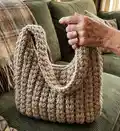
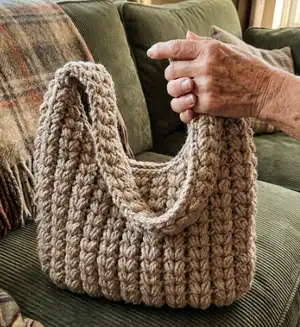
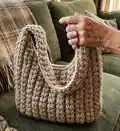
This pattern teaches you how to crochet a textured chunky handbag using puff stitches to create decorative "check marks" across the fabric. You will make the bag base, trim, handle, sew in a cotton lining and attach a valve closure. Clear photos and step-by-step rows guide you through every stage for a neat finished bag.

Winter fairytail Crochet Pattern crochet pattern - detailed view of completed project

Designed with bulky alpaca-wool yarn and a 5mm hook, the result is a sturdy, tactile bag with a modern hand-made feel. The pattern is beginner friendly but yields a stylish, professional result.

Why You'll Love This Winter fairytail Crochet Pattern

I absolutely love this pattern because the puff stitch 'check marks' create a beautiful sculptural texture that makes the bag feel couture yet cozy. I enjoy that the pattern is approachable for beginners but still produces a striking accessory you can be proud of. Sewing in the lining and attaching the valve give the piece a professional finish that I always enjoy achieving. Every time I make one I customise the handle length or lining color to make it uniquely mine.

Winter fairytail Crochet Pattern step 1 - construction progress Winter fairytail Crochet Pattern step 2 - assembly progress Winter fairytail Crochet Pattern step 3 - details and accessories Winter fairytail Crochet Pattern step 4 - final assembly and finishing

Switch Things Up

I love making variations of this pattern by switching yarn and hook size; using a bulkier yarn and a larger hook creates a chunky tote, while lighter yarn and a smaller hook gives a daintier purse.

I often change the lining color for a pop of contrast—try a patterned cotton or bold color to make the interior a surprise element.

For a more structured bag, I sometimes insert a thin piece of interfacing in the lining base before sewing it in; it helps the bag keep its shape when filled.

I like to add decorative trims like leather tabs, tassels or metal studs near the valve for a more polished, boutique look.

To shorten or lengthen the handle, I alter the repeated turning rows and measure against my shoulder—this lets me customize it for shoulder carry or hand carry.

Try embroidering initials or a small motif on the lining before sewing it in to personalize the bag for gifts.

If you want a fully waterproof interior, use laminated cotton for the lining instead of regular cotton.

I sometimes make the valve from matching yarn and crochet a decorative flap instead of using a pre-made valve for a fully handmade aesthetic.

For holiday versions I switch yarn colors seasonally—metallic thread held with the main yarn adds a subtle sparkle perfect for festive gifts.

Don’t be afraid to play with scale: make a mini version as a coin pouch by reducing chain starting count and handle size, or a large market tote by increasing rows and using thicker yarn.

Common Mistakes & How to Fix Them

✗ Skipping the 2nd-loop start when working the first row causes uneven foundation stitches; always work the first row from the 2nd loop from the hook to create a clean base. ✗ Pulling the puff stitch loops too short will flatten the texture and change gauge; pull up the puff loop to about 27-30 mm as instructed for consistent puff height. ✗ Forgetting to count "check marks" when shaping corners can lead to mismatched sides; mark and count the check marks and corners before turning each row to stay symmetrical. ✗ Not pinning and aligning the lining before stitching can make assembly inaccurate; pin the lining carefully and match side seams to the base midpoints before sewing.

Winter fairytail Crochet Pattern

Create a cozy, chunky handbag with this detailed crochet pattern designed for beginners. You'll learn a textured puff-stitch 'check mark' technique that gives the bag its signature look and sturdy structure. The pattern includes full instructions for the base, trim, lining, handle, valve and assembly so you can finish a polished bag. Follow step-by-step photos and clear notes to make a beautiful, everyday accessory you can gift or sell.

Beginner Friendly 5-7 Hours

Materials Needed for Winter fairytail Crochet Pattern

— Main Fabric

  • 01
    Wool yarn with alpaca, 130 m / 100 g (approximately 400 yards / 370 m per 3 skeins) - example used: 3 skeins Bugeto Alpaca Wool yarn
  • 02
    Fabric for the lining: cotton or linen, 12 x 28 inches (30 x 70 cm) - 2 pieces
  • 03
    Valve closure 6 x 1 1/4 inches (15 x 3 cm) - 1 piece

— Tools Required

  • 01
    Crochet hook size 5.0 mm
  • 02
    Scissors
  • 03
    2 stitch markers
  • 04
    Plastic needle with large eyelet
  • 05
    Sewing needle and sewing thread to match the yarn
  • 06
    Pins for assembly
  • 07
    Iron and damp cloth for steaming/pressing
  • 08
    Measuring ruler (mm/inches)

Progress Tracker

0% Complete

— Base of the bag :

Info :

Crochet chain with 21 CH.

Row 1 :

Crochet from the 2nd loop from the hook: 19 SC, 3 SC in 1, turn, 18 SC, 2 SC in 1 (=42), SlSt in the 1st SC, 3 CH.

Row 2 :

Skip 1 loop with SlSt and next loop. Crochet in the 3rd loop: PC (make 3 yarn over and pull up 3 loops (7 loops on the hook); yarn over and pull through all 7 loops on the hook; chain one to close the puff stitch).

Info :

Pull up the loop to the level of the hook 27-30 mm long.

Row 2 continued :

Crochet CH and one more PC in the same loop. We got a "check mark" with 2 PC with one base and 1 CH between the peaks.

Row 2 instructions :

Skip 2 loops, crochet next "check mark" with 2 PC and 1 CH in the middle. Crochet 4 more "check marks" to the end of the row, skipping 2 loops of the previous row. Then crochet 1 "check mark" in the top of the side part. Turn, crochet 6 "check marks", skipping 2 loops of the previous row. Next 1 more "check mark" in the top of the another side part.

Row 2 info :

The "check marks" should be opposite each other. There should be 14 "check marks" in total (28 PC). Crochet SlSt in the 4th loop of the previous row, 3 CH.

Row 3 :

Next, crochet the base of the "check marks" in this and each subsequent row in the "check mark" (under CH between the "check marks" of the previous row).

Row 3 corner increase :

First, make an increase in the corner. For this, crochet: PC, CH, PC, CH, PC in the 1st "check mark" of the previous row.

Row 3 continuation :

Next crochet 4 "check marks". Increase in the corner again: PC, CH, PC, CH, PC. Then crochet 1 "check mark". Increase in the corner: PC, CH, PC, CH, PC. Next crochet 4 "check marks". Increase in the corner again: PC, CH, PC, CH, PC. Crochet last 1 "check mark", SlSt, 3 CH.

Row 4 :

Crochet 18 "check marks" in each "check mark" of the previous row, SlSt, 3 CH.

Row 5 :

18 "check marks", SlSt, 3 CH.

Rows 5-15 :

18 "check marks", SlSt, 3 CH.

Row 16 :

18 "check marks", SlSt.

— Base trim :

Info :

Crochet this row with SlSt on the back loop only.

Finish :

Crochet to the end of the row. Cut the thread, pull out the end. Close the row with the end. Strengthen and hide the end.

Info :

Steam the base of the bag with an iron through a damp cloth on the wrong side.

— Lining :

Info :

For the lining, it is better to take a stiff cotton fabric. For example, cotton or linen.

Info :

Take a sheet of paper and outline the base. Put the pattern on the fabric. Cut out 2 parts with a seam allowance of 5-7 mm for sewing.

Info :

If desired, you can cut a pocket. First, sew the pocket on one part. Then sew two parts of the lining. Wrap and hem the edge on top.

Info :

At this stage, you can give it to the atelier.

— Handle :

Info :

Fold the base in half, on the sides in the middle, 1 "check mark". Count 2 "check marks" on the right and left of it. Place the markers. There are 5 "check marks" between markers.

Handle Row 1 :

Insert the hook between "check marks", where the first marker is. Crochet 3 CH with 2 thread.

Handle Row 1 continued :

Next crochet 5 "check marks". Crochet DC with the base between the "check marks", where the second marker is.

Turning rows info :

Next crochet the turning rows.

Handle Row 2 :

Crochet 25 SlSt from the 2nd loop from the hook on the back loop only.

Handle Row 3 :

3 CH, PC in the 1st "check mark" of the 1st row, 3 "check marks", PC in the 5th "check mark" of the 1st row, DC in the 1st SlSt of the previous row.

Handle Row 4 :

Crochet 19 SlSt from the 2nd loop from the hook on the back loop only.

Handle Row 5 :

3 CH, 3 "check marks", DC in the 1st SlSt of the previous row.

Handle Row 6 :

Crochet 15 SlSt from the 2nd loop from the hook on the back loop only.

Handle Row 7 :

3 CH, 3 "check marks", DC in the 1st SlSt of the previous row.

Handle Row 8 :

Crochet 15 SlSt from the 2nd loop from the hook on the back loop only.

Handle Row 9 :

3 CH, 3 "check marks", DC in the 1st SlSt of the previous row.

Handle Row 10 :

Crochet 15 SlSt from the 2nd loop from the hook on the back loop only.

Handle Rows 11-24 :

Crochet repeating rows 9-10. Cut the thread, pull out the end. Strengthen and hide the end.

Handle finishing :

Similarly crochet the 2nd part of the handle. Leave the end for sewing on the second part of the handle 28 inches (70 cm) long. Steam both parts of the handle with an iron through a damp cloth on the wrong side.

Handle assembly :

Fold the parts of the handle with the front sides together, sew with a plastic needle. Insert the needle under two loops of each part. Strengthen and hide the end. Steam the seam with an iron through a damp cloth on the wrong side.

— Sew on the valve :

Valve top part :

Top part. Sew the top part of the valve with the sewing needle and thread in the middle of the base part, between "check marks" of the 14th and 15th rows. Strengthen the end on the wrong side.

Valve lower part :

Lower part. Fold the valve. Try on where the lower part will be. In the example, in the middle of the 13th row. Sew the lower part of the valve with the sewing needle and thread. Strengthen the end on the wrong side.

— Sew in the lining :

Info :

Put the lining inside, straighten it with our hands. The top of the lining is about 2 rows below the edge of the base.

Info :

The side seams of the lining should match the middle of the side "check marks". Fold the bag in half so that the side seams match. Mark the middle of the lining. Align it with the middle of the base. Do the same on the other side. Pin with pins.

Sewing :

Take the sewing thread to match the color of the handbag. Sew in the lining to the handbag with neat, small stitches. Insert the needle behind the edge of the lining. Make fixing stitches in 3-4 places. If desired, you can steam the seam through a damp cloth.

Assembly Instructions

  • Sew the top part of the valve in the middle of the base between the "check marks" of the 14th and 15th rows, then fold and sew the lower part so the lower piece aligns around the 13th row; secure ends on the wrong side.
  • Pin the lining inside aligning the side seams of the lining with the middle of the side "check marks" and the top of the lining about two rows below the base edge, then sew the lining in with neat small stitches.
  • Fold and position the handle markers on the base (count 2 "check marks" each side, five "check marks" between markers), crochet both handle parts, seam them together, and sew each handle end to the bag aligning markers.
  • Finish base trim with a SlSt row in the back loop only, cut and hide ends, then steam the base and the handle seams through a damp cloth to set the shape.

Important Notes

  • 💡Work puff stitches consistently; pull the loop up to about 27-30 mm to achieve uniform 'check marks' texture.
  • 💡Use stitch markers to mark the middle and handle placement so both sides remain symmetrical during assembly.
  • 💡When sewing in the lining, pin and match side seams to the base midpoints before stitching to avoid misalignment.
  • 💡Steam the base and handle seams through a damp cloth on the wrong side to strengthen and flatten seams for a professional finish.

This chunky Winter fairytail bag is a delightful mix of cozy texture and modern design that makes every outfit feel special. Handcrafted details like the puff-stitch 'check marks', lined interior and stitched valve give a polished finish you can be proud of. Make one for yourself or gift it to someone who loves warm, tactile accessories. 🧶✨👜
You ask,

we answer.

FAQs

What size will the finished piece be?

The finished bag measures approximately 13 inches (33 cm) wide by 10 1/4 inches (26 cm) long with a handle length of about 20 inches (50 cm) when using the specified yarn and hook.

Can I use different yarn weights for this pattern?

Yes, you can use different yarn weights, but this will affect the final size and texture. If you change yarn weight, adjust your hook size and make a swatch to match gauge.

Do I need a sewing machine to make the lining?

No, you can sew the lining by hand if you prefer. The pattern suggests sewing with neat small stitches by hand or machine; either method will produce a secure finish.

Do I need prior crochet experience for this pattern?

This pattern is rated beginner friendly; basic stitches (chain, single crochet, double crochet, slip stitch) and the puff stitch are used, with clear photo steps to guide you.

How long does this project typically take to complete?

Most crocheters finish this bag in about 5-7 hours, depending on experience, finishing choices, and whether you sew the lining by hand or machine.