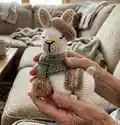
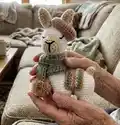
🧢 Beautiful ✨ Detailed πŸ’ Adorable

Louisa Llama Amigurumi Pattern

Louisa Llama Amigurumi Pattern
4.4β˜… Rating
5-7 Hours Time Needed
3.4K Made This
βœ‚οΈ

Intermediate Level

Ideal for those with basic crochet experience, featuring slightly more advanced stitches and techniques to expand your skills.

⏱️

Weekend Treat

Takes 5-7 hours, making it an enjoyable project to finish over a couple of days.

🧸

Cute Companion

An adorable friend to cherish, handcrafted with love to bring comfort and joy for years to come.

About This Louisa Llama Amigurumi Pattern

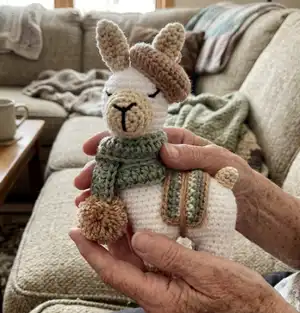
This pattern creates a small, stylish llama complete with a tiny blanket, a cosy scarf with pom poms and a beret. It uses medium weight yarn and a 3.5mm hook for the main body and a 5mm hook for the scarf. The design features joined legs, a shaped belly, a sewn-on muzzle and embroidered facial features for a charming finish.

Louisa Llama Amigurumi Pattern crochet pattern - detailed view of completed project

Step-by-step photos and clear round-by-round instructions help you assemble each part accurately. The finished llama stands around 9-10 inches tall depending on yarn and tension.

Why You'll Love This Louisa Llama Amigurumi Pattern

I absolutely love this pattern because it combines simple amigurumi techniques with sweet, wearable accessories that bring personality to the finished llama. I enjoy the joined-legs method used here because it makes the body sturdy and neat, and the belly shaping gives the llama a lovely silhouette. The small details β€” the beret, blanket and pom poms β€” let me play with color and texture, and sewing them on is always satisfying. This pattern is a pleasure to stitch from start to finish and makes a thoughtful handmade gift.

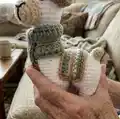
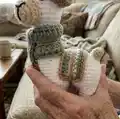
Louisa Llama Amigurumi Pattern step 1 - construction progress Louisa Llama Amigurumi Pattern step 2 - assembly progress Louisa Llama Amigurumi Pattern step 3 - details and accessories Louisa Llama Amigurumi Pattern step 4 - final assembly and finishing

Switch Things Up

I love experimenting with colour choices for the blanket and scarf β€” try soft pastels for a sweet nursery look or rich autumn tones for a cozy seasonal version.

You can make a mini keychain-sized llama by swapping to a lighter weight yarn and a smaller hook; this works great for tiny gifts or bag charms.

I often swap the beret for a tiny flower or bow for a different personality β€” crochet a small appliquΓ© and stitch it to the top instead of the beret loop.

Try using boucle or textured yarn for the body to give the llama a fluffy, realistic coat; just be aware that textured yarn can hide stitch definition and make sewing parts a little trickier.

If you want a poseable llama, consider threading thin wire through the neck before stuffing or into the legs for gentle shaping and a sturdier stance.

For a modern look, use a monochrome palette and bright contrasting pom poms β€” the accessories really make the design pop.

I sometimes embroider eyelashes or a small heart on the blanket to personalise each llama β€” these little details make each finished piece unique.

Try combining yarn types: cotton for the feet and muzzle for firmness, and acrylic for the body for softness and durability.

Adjust scarf length and pom pom size to change the visual balance of the piece; larger pom poms look playful, while smaller ones are more subtle.

If you want to sell your finished toys, consider making small tags with care instructions and materials used to let buyers know how to care for their new handmade llama.

Common Mistakes & How to Fix Them

βœ— Skipping stitch markers at the start of rounds can cause you to lose track of the beginning; place a marker in the marked chain or at the first stitch and move it each round to maintain accurate counts. βœ— Not stuffing gradually leads to lumps or gaps in the limbs and head; stuff a little at a time and shape as you go so the piece remains smooth and well-proportioned. βœ— Closing the legs incorrectly before joining can make alignment awkward; follow the instructions for legs 1 and 3 versus legs 2 and 4 and do not cut the yarn when instructed to join sets. βœ— Working with loose tension lets the stuffing show through and ruins the neat amigurumi look; use a smaller hook if your tension is loose to ensure tight, neat stitches. βœ— Forgetting to count decreases during the head shaping causes incorrect stitch counts; count after each decrease round and confirm the total matches the pattern before moving on.

Louisa Llama Amigurumi Pattern

Make a charming Louisa Llama amigurumi with cozy accessories β€” a blanket, scarf with pom poms and a beret. This pattern walks you through joined legs, belly shaping, and a simple head and muzzle construction so you can create a cuddly llama with personality. Clear photos and step-by-step rounds make assembly straightforward so you can enjoy a delightful handmade gift or decor piece.

Intermediate 5-7 Hours

Materials Needed for Louisa Llama Amigurumi Pattern

β€” Main Fabric

  • 01
    Medium weight cotton/acrylic/polyester yarn: in your choice of colours for the body, and the feet, muzzle, ears and tail
  • 02
    Black yarn for embroidering facial features
  • 03
    Cream cotton yarn (example: Abbey Road kung fu cotton) for feet, muzzle, ears and tail (use smooth, firm cotton for small details)
  • 04
    Soft polyester or acrylic yarn for the body (example: Makr Colourmate) for a softer body finish
  • 05
    Blanket/Scarf/Beret yarn: medium weight acrylic/polyester/wool yarn (example: Heirloom Easy Care in magnolia, pale eucalyptus and hazelnut)

β€” Tools Required

  • 01
    Crochet hook size US E / 3.5mm
  • 02
    Crochet hook size US H / 5.00mm (for scarf)
  • 03
    Polyester fiberfill
  • 04
    Yarn needle (a bent tip yarn needle is generally easier for amigurumi)
  • 05
    Stitch markers
  • 06
    Scissors
  • 07
    Piece of cardboard for pom poms (or a small pom pom maker if you have one)

Progress Tracker

0% Complete

β€” Notes :

Info :

This pattern is written using US crochet terms. Crochet in a spiral, unless otherwise specified. A stitch marker at the start/end of each round can help keep track of stitches. Crochet tightly enough that the filler doesn't show. If your tension tends to be looser, choose a smaller hook. The size of the finished piece can vary depending on the yarn, tension and filling. The white llama pictured (using acrylic yarn) stands at 9 inch/23cm tall. The beige llama (using poly yarn) stands at 10 inch/26cm. A tutorial video for the legs is included. This pattern is for personal use only.

β€” Instructions :

β€” Legs :

Info :

(Make 4) Start with cream yarn

Round 1 :

6 SC in a MR (6)

Round 2 :

(2 SC, inc) x 2 (8)

Round 3 :

8 SC (8)

Round 4 :

(3 SC, inc) x 2 (10)

Round 5 :

10 SC (10)

Info :

Change to main body yarn

Round 6 :

10 SC (10)

Round 7 :

(4 SC, inc) x 2 (12)

Round 8-9 :

12 SC (12)

Info :

(See tutorial on the next section of the legs here)

Item For legs 1 and 3 :

sl st and close after R9. Cut the yarn and weave in the tail

Item For legs 2 and 4 :

Do not close after R9. Chain 4, then join to legs 1 and 3 respectively with a SC (it helps to place a marker in this st). Do not cut the yarn. So leg 2 connects to leg 1, and leg 4 connects to leg 3.

β€” Legs/ Belly :

Info :

(For each of the two sets of joined legs) After the SC done in the previous step:

Round 1 :

8 SC, 3 inc, 4 SC (in the 4 ch between legs), 3 inc, 13 SC (takes you to end of ch). sl st back into the SC with the stitch marker (38)

Info :

Close and cut the yarn. Weave in the ends.

β€” Body :

Info :

Line up the two leg sets on their flatter sides, and stitch 12 sl sts to attach them together (Use the middle 12 sts as per the image)

Item :

Ch 1 (put stitch marker in this ch, to mark where next round ends)

Round 1 :

54 SC around (26 SC, 1 SC in between the legs, 26 SC, 1 SC in marked ch stitch)

Round 2 :

13 SC, dec, 24 SC, dec, 13 SC (52)

Round 3 :

12 SC, dec, 24 SC, dec, 12 SC (50)

Round 4-6 :

50 SC (50)

Info :

Crochet 1 or 2 SC to get to the middle of the back of the llama and start next round from here

Round 7 :

4 SC, dec, 38 SC, dec, 4 SC (48)

Round 8 :

3 SC, dec, 38 SC, dec, 3 SC (46)

Round 9 :

2 SC, dec, 38 SC, dec, 2 SC (44)

Round 10 :

SC, dec, 38 SC, dec, SC (42)

Info :

Crochet 1 or 2 SC to get to the middle of the back of the llama

Item :

Make 12 sl sts to join two sides of back together (leave the one stitch at the very back unstitched). This leaves 17 SC left over for the neck.

β€” Neck :

Round 1 :

17 SC around, and 1 SC in middle line (18)

Info :

Stuff the legs and body of the llama, making sure to get filling all the way down the legs, and that all 4 legs touch the ground at once

Round 2 :

18 SC (18)

Round 3 :

(7 SC, dec) x 2 (16)

Round 4 :

16 SC (16)

Round 5 :

(6 SC, dec) x 2 (14)

Round 6 :

14 SC (14)

Round 7 :

(5 SC, dec) x 2 (12)

Round 8 :

12 SC (12)

Info :

Stuff the neck. Do not close. The head continues straight from here.

β€” Head :

Round 1 :

(SC, inc) x 6 (18)

Round 2 :

(2 SC, inc) x 6 (24)

Round 3 :

(3 SC, inc) x 6 (30)

Round 4-8 :

30 SC (5 rows of 30)

Round 9 :

(3 SC, dec) x 6 (24)

Round 10 :

(2 SC, dec) x 6 (18)

Round 11 :

(SC, dec) x 6 (12)

Info :

Stuff the head

Round 12 :

6 dec (6)

Info :

Close and cut the yarn, sew the hole closed and weave in the tail

β€” Tail :

Round 1 :

4 SC in a MR (4)

Round 2 :

4 inc (8)

Round 3-4 :

8 SC (8)

Info :

Close with a sl st and cut the yarn, leaving a long tail for sewing

Item :

Sew the tail to the body, above the first slip stitches that join the back

β€” Muzzle :

Round 1 :

6 SC in a MR (6)

Round 2 :

6 inc (12)

Round 3 :

(SC, inc) x 6 (18)

Round 4-5 :

18 SC (18)

Info :

Close with a sl st and cut the yarn, leaving a long tail for sewing

Item :

Sew muzzle to head, stuffing before you reach the end

β€” Ears :

Info :

(Make 2)

Round 1 :

4 SC in a MR (4)

Round 2 :

(SC, inc) x 2 (6)

Round 3 :

(2 SC, inc) x 2 (8)

Round 4 :

(3 SC, inc) x 2 (10)

Round 5-8 :

10 SC (10)

Info :

Flatten the ear and sl st closed along the top

Info :

Close and cut the yarn, leaving a long tail for sewing

Item :

Pinch the base of the ear and sew in place, before sewing on to the head

β€” Face :

Info :

Embroider the face using black yarn

β€” Blanket :

Info :

- Use size E/3.5mm hook. Colour change after each row if desired, using your preferred method. I alternate 3 colours as pictured below. Crochet over the ends as you go, or you can weave in the ends on the underside of the blanket at the end.

Round 1 :

Make a slip knot, ch 19, 1 SC into 2nd ch from hook, 17 SC (18)

Round 2-5 :

Ch 1, turn, 18 SC (18)

Info :

Close with a sl st, cut the yarn and weave in the tails.

β€” Blanket Border :

Info :

Using border colour yarn, sl st on to the edge of the blanket and ch 1 (you can start in the corner if you prefer). SC all the way around, with 3 SC in each of the corners. Sl st back into 1st st, close and cut the yarn and weave in the tail.

Item :

Tie the blanket to the body by wrapping a piece of yarn around 2 or 3 times, and securing with a knot under the belly.

β€” Scarf :

Info :

- Use size H/5mm crochet hook

Round 1 :

Make a slip knot, ch 62, HDC into 3rd ch from hook, 59 HDC (60)

Round 2 :

Ch 2, turn, 60 HDC (60)

Info :

Close and cut the yarn, and weave in the ends.

β€” Pom Poms for Scarf :

Info :

(Make 2) (You can use a small pom pom maker instead if you have one, or use another method if you prefer)

Step 1 :

Cut a piece of cardboard to 5cm (2 inch) wide

Step 2 :

Cut a slit down the middle of the cardboard, 3/4 of the way down

Step 3 :

Cut a piece of yarn around 25cm (10 inch) long and insert it between the slit, sliding it to the bottom of the opening

Step 4 :

Wrap the working yarn around the cardboard 80 or more times (the more times, the fuller the pom pom will be). Cut the working yarn

Step 5 :

Pull down on the 25cm (10 inch) length of yarn that's in the slit in the cardboard. Tie it tightly around the wraps and secure it with a knot

Step 6 :

Slide the pom pom off the cardboard. Tie an extra piece of yarn around the middle and knot to ensure it's tight

Step 7 :

Cut the ends of the loops. Trim the pom pom where necessary, making sure to leave two long ends for sewing on to the scarf. Use the long pieces of yarn from the pom poms to sew on to each end of the scarf, and secure with a double knot.

Item :

Fold the scarf in half, place around the llama's neck and pull the ends through the loops to fit snugly.

β€” Beret :

Info :

- Use size E/3.5mm hook. This is made using joined rounds, not a continuous spiral.

Round 1 :

Start with a MR, leaving a 20cm (8 inch) tail for the beret's loop. Ch 3 (count as a st), 10 DC (11)

Round 2 :

Sl st into 3rd ch of last round, ch 3 (count as a st), DC in same st, ch 4, sk 2, DC inc x 8 (22)

Round 3 :

Sl st into 3rd ch of last round, ch 3 (count as a st), DC inc, 6 DC in ch 4 space, (1 DC, DC inc) x 8 (33)

Round 4 :

Sl st into 3rd ch of last round, ch 3 (count as a st), DC around (33)

Round 5 :

Sl st into 3rd ch of last round, ch 1 (count as a st), inv dec, (SC, inv dec) x 10 (22)

Info :

Close with a sl st, cut the yarn and weave in the tail. Make a loop with yarn tail on top of the beret. Sew in a few stitches to secure, and finish with a knot inside the beret. Put the beret on the llama's head, with the hole over one ear.

Assembly Instructions

  • Sew the tail to the body above the first slip stitches that join the back, using the long tail left from the tail piece and secure with tight stitches.
  • Sew the muzzle to the head, stuffing lightly as you reach the end so it keeps shape, and weave in the tail to secure.
  • Flatten each ear and sl st closed along the top, pinch the base and sew each ear to the top of the head, positioning them symmetrically before securing.
  • Line up the two joined leg sets and stitch 12 slip stitches to attach them together (use the middle 12 stitches). After forming the body, sew the blanket in place and tie it under the belly with a piece of yarn wrapped 2–3 times and knotted.
  • Attach the pom poms to the ends of the scarf by sewing through the long yarn tails and securing with a double knot, then fold the scarf in half around the neck and pull the ends through the loop for a snug fit.

Important Notes

  • πŸ’‘Use stitch markers to keep track of your rounds, especially when joining legs and during shaping sections.
  • πŸ’‘Stuff gradually and evenly - add small amounts of stuffing as you shape the head and neck to avoid lumps.
  • πŸ’‘Work with consistent tension and consider using a smaller hook if your stitches are loose to prevent stuffing from showing.
  • πŸ’‘Pin parts in place before sewing to ensure correct positioning and symmetry of ears, muzzle and accessories.
  • πŸ’‘Weave in ends as you go where possible to avoid a long finishing session at the end.

Louisa Llama is a sweet, handmade companion perfect for gifting or keeping on a shelf. Her tiny beret, cosy scarf with pom poms and decorative blanket make her a stylish and heartwarming make 😍🧢 This pattern combines simple amigurumi shaping with adorable accessories for a delightful finish. Enjoy stitching every detail and creating your own colour combos! ✨ Happy crocheting and may each stitch bring a smile! 🐾
You ask,

we answer.

FAQs

What size will the finished piece be?

The finished amigurumi measures approximately 9-10 inches tall when using the recommended medium weight yarn and 3.5mm hook; final size depends on yarn choice and tension.

Can I use different yarn weights for this pattern?

Yes, you can use different yarn weights, but this will affect the final size; adjust the hook size accordingly and be aware that accessory stitch counts may appear tighter or looser.

Do I need prior crochet experience for this pattern?

This pattern is rated intermediate, so basic knowledge of single crochet, increases, decreases and working in the round is recommended for best results.

How long does this project typically take to complete?

Most crocheters complete this project in 5-7 hours, depending on experience level and how much time you spend on assembly and accessories.

Are the legs joined together or sewn?

The legs are joined using chains and slip stitches as described β€” legs 1 and 3 are closed while legs 2 and 4 are joined so that paired sets are formed and then joined into the body.