🧢 Beautiful ✨ Detailed πŸ’ Adorable

Duck No Sew Amigurumi Pattern

Duck No Sew Amigurumi Pattern
4.0β˜… Rating
2-3 Hours Time Needed
3.1K Made This
βœ‚οΈ

Intermediate Level

Ideal for those with basic crochet experience, featuring slightly more advanced stitches and techniques to expand your skills.

⏱️

Bite-Sized Project

Finishes in 2-4 hoursβ€”perfect for an afternoon of creative relaxation.

🎁

Tiny Treasure

Small, sweet, and gift-worthy creations that fit perfectly in the palm of your hand with detailed charm.

About This Duck No Sew Amigurumi Pattern

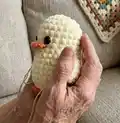
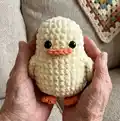
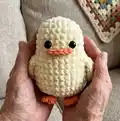
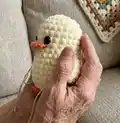
This pattern creates a small no-sew duck amigurumi using super bulky yarn for a plush, cuddly finish. You will crochet the body and head in one piece, add small crocheted legs, a beak (speculum), and wings β€” no large sewing required. The pattern includes color-change notes so you can make a yellow duck or a mallard-style duck with green and brown colorwork.
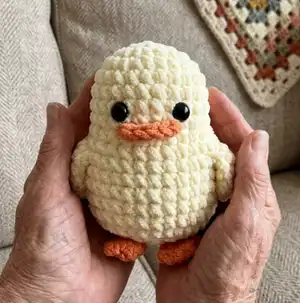
Duck No Sew Amigurumi Pattern crochet pattern - detailed view of completed project

Clear round-by-round instructions and helpful photos guide you through shaping and finishing. Materials and abbreviations are listed so you can begin right away.

Why You'll Love This Duck No Sew Amigurumi Pattern

I absolutely love this pattern because it is fast to make and instantly satisfying; the super bulky yarn creates a plush texture that feels wonderful in the hand. I enjoy the clever no-sew construction β€” crocheting the body up into the head means less finishing and a cleaner look. The color-change options let me make different personalities: a sunny yellow duck or a handsome mallard, both using the same shaping. Each little detail like the tiny beak and feet give the finished duck loads of charm.

Duck No Sew Amigurumi Pattern step 1 - construction progress Duck No Sew Amigurumi Pattern step 2 - assembly progress Duck No Sew Amigurumi Pattern step 3 - details and accessories Duck No Sew Amigurumi Pattern step 4 - final assembly and finishing

Switch Things Up

I love experimenting with color to give each duck a different personality β€” try pastel yellows, soft greys, or bright neons for a modern twist.

I often change yarn weight and hook size to make minis or larger huggable versions; using worsted weight with a smaller hook gives a compact mini while bulky yarn makes a chunky friend.

I sometimes add embroidery on the chest or tiny felt cheeks for extra character; a few simple stitched lines change the expression and make each one unique.

For more realism, use safety eyes of different sizes or embroider the eyes for a safer toy for small children.

I add a tiny keyring loop to the top so the duck becomes a portable charm β€” just attach a small metal ring before finishing off the top rounds.

Try substituting faux fur or textured yarn for the wings or body to create a fluffy, tactile version that’s fun to touch.

I like to crochet little outfits β€” a tiny scarf, hat, or jacket β€” using leftover yarn to make a coordinating set of ducks with matching accessories.

If you want a posable duck, add thin wire inside the wings or legs before stuffing them, then secure the ends inside the body so they can be posed gently.

To change the face, move the eyes up or down a round or shift them a stitch left/right β€” small adjustments dramatically alter the expression.

I recommend blocking color transitions by weaving in the color tails neatly and hiding ends inside the body to keep the surface tidy and professional-looking.

For holiday variations, swap colors: red/green for Christmas, pastel shades for Easter, or add tiny festive embroidery for special occasions.

Common Mistakes & How to Fix Them

βœ— Skipping stitch counts when changing colors can cause gaps or uneven shaping; count stitches at each round and mark the stitch where you change color to keep alignment. βœ— Forgetting to stuff gradually leads to lumps or a misshapen body; add small amounts of fiberfill as you go and shape with your fingers for an even finish. βœ— Pulling your yarn too tight when making increases or decreases will distort the round shape; keep a consistent, relaxed tension and practice decreases to keep the silhouette smooth. βœ— Not placing safety eyes at the correct round will make the face look off-center; measure between the rounds and stitches given in the pattern (for example rows 7 and 8, 4 stitches apart) before securing the eyes.
Duck No Sew Amigurumi Pattern

Create an adorable no-sew duck amigurumi you can finish quickly. This pattern walks you through every round with clear step-by-step instructions so you can crochet the body, head, wings, beak and feet without sewing pieces together. Perfect for making gifts, keychain pals, or a small handmade collection β€” you will enjoy the simple shaping and cute results.

Intermediate 2-3 Hours

Materials Needed for Duck No Sew Amigurumi Pattern

β€” Main Fabric

  • 01
    Super Bulky yarn (Category 6) - Yellow - as needed for the main duck body (no specific weight provided)
  • 02
    Super Bulky yarn (Category 6) - Orange - as needed for beak (speculum) and feet
  • 03
    Super Bulky yarn (Category 6) - Green - as needed for mallard head
  • 04
    Super Bulky yarn (Category 6) - Brown - as needed for mallard body
  • 05
    Super Bulky yarn (Category 6) - White - as needed for accents or other bird versions
  • 06
    Super Bulky yarn (Category 6) - Red and Yellow - as needed for rooster comb and beak
  • 07
    Fiberfill stuffing - as needed to stuff body and small pieces

β€” Tools Required

  • 01
    Crochet hook size 3.5mm (E)
  • 02
    Stitch marker
  • 03
    Sewing needle
  • 04
    Scissors
  • 05
    Plastic safety eyes 8mm (for duck) and 6mm (for rooster) depending on pattern
  • 06
    Hot gun glue
  • 07
    Polyester stuffing (fiberfill)

Progress Tracker

0% Complete

β€” Body & Head (Yellow) :

Round 1 :

6 SC in an MR (6)

Round 2 :

6 INC (12)

Round 3 :

(SC, INC) 6 times (18)

Round 4 :

(2 SC, INC) 6 times (24)

Round 5-8 :

24 SC (24)

Round 9 :

5 INC, 14 SC, 5 INC (34)

Round 10 :

9 SC, (5 Ch, turn: SC, HDC, 2 DC), Sk 2, 12 SC, (5 Ch, turn: SC, HDC, 2 DC), Sk 2, 9 SC (34)

Round 11 :

9 SC, 2 SC (Crochet into the two skip stitches in R10), 12 SC, 2 SC (Crochet into the two skip stitches in R10), 9 SC (34)

Round 12-16 :

34 SC (34)

Round 17 :

17 DEC (17)

Info :

*Stuffing*

Round 18 :

(SC, DEC) 5 times, 2 SC (12)

Round 19 :

6 DEC (6)

Info :

Weave in the yarn end and cut

β€” Legs (Make 2) :

Round 1 :

Make 3 CH. Start in the second stitch from the hook: 2 SC (2)

Round 2-3 :

2 SC (2)

Info :

Keep the yarn without cutting it. Crochet 2 Slip stitches into the body at the position of the feet.

Info :

Attach eyes on rows 7 and 8, spaced 4 stitches apart.

β€” Speculum (Beak) :

Round 1 :

4 Slip stitch into the 4 stitches between rows 8 and 9 (the 4 stitches between the eyes), turn.

Round 2 :

Ch, 4 SC

Info :

Cut the yarn

β€” Mallard Body & Head (Green) :

Round 1 :

6 SC in an MR (6)

Round 2 :

6 INC (12)

Round 3 :

(SC, INC) 6 times (18)

Round 4 :

(2 SC, INC) 6 times (24)

Round 5-8 :

24 SC (24)

Info :

Change to White yarn

Round 9 :

5 INC, 14 SC, 5 INC (34)

Info :

Change to Brown yarn

Round 10 :

9 SC, (5 Ch, turn: SC, HDC, 2 DC), Sk 2, 12 SC, (5 Ch, turn: SC, HDC, 2 DC), Sk 2, 9 SC (34)

Round 11 :

9 SC, 2 SC (Crochet into the two skip stitches in R10), 12 SC, 2 SC (Crochet into the two skip stitches in R10), 9 SC (34)

Round 12-16 :

34 SC (34)

Round 17 :

17 DEC (17)

Info :

*Stuffing*

Round 18 :

(SC, DEC) 5 times, 2 SC (12)

Round 19 :

6 DEC (6)

Info :

Weave in the yarn end and cut

β€” Mallard Legs (Make 2) :

Round 1 :

Make 3 CH. Start in the second stitch from the hook: 2 SC (2)

Round 2-3 :

2 SC (2)

Info :

Keep the yarn without cutting it. Crochet 2 Slip stitches into the body at the position of the feet. Attach eyes on rows 7 and 8, spaced 4 stitches apart.

β€” Mallard Speculum (Beak) :

Round 1 :

4 Slip stitch into the 4 stitches between rows 8 and 9 (the 4 stitches between the eyes), turn.

Round 2 :

Ch, 4 SC

Info :

Cut the yarn

β€” Wings (Make 2) :

Info :

Use white yarn

Round 1 :

Make 4 chains, start with the second chain from the hook: INC, SC, 4 SC in the last stitch, SC, INC, 2 CH, Picot, CH, SLST in the first stitch

Info :

Weave in the yarn end and cut

β€” Rooster Wings :

Info :

WINGS: MAKE 2. Use white yarn.

Round 1 :

Make 4 chains, start with the second chain from the hook: INC, SC, 4SC in the last stitch, SC, INC, 2CH, Picot, CH, SLST in the first stitch

Info :

Weave in the yarn end and cut

β€” Rooster Body & Head (White) :

Info :

CROCHET FROM THE BODY UP TO THE HEAD (NO SEW). You'll switch to black yarn the text is in bold and underlined. Use white yarn.

Round 1 :

6 SC in an MR (6)

Round 2 :

6 INC (12)

Round 3 :

(SC, INC) 6 times (18)

Round 4 :

(2 SC, INC) 6 times (24)

Round 5 :

(3 SC, INC) 6 times (30)

Round 6 :

(4 SC, INC) 6 times (36)

Round 7-8 :

36 SC (36)

Round 9 :

7 SC, 4 SC with the 1st arm, 14 SC, 4 SC with the 2nd arm, 7 SC (36)

Round 10-11 :

36 SC (36)

Info :

Make 6 CH, SLST in the first st, repeat 3 times, crochet with 2 pieces together with 10 SLST

Info :

*Stuffing*

Round 12 :

CH, 16 SC (16)

Round 13 :

(3 SC, INC) 4 times (20)

Round 14-15 :

20 SC (20)

Round 16 :

(2 SC, DEC) 5 times (15)

Round 17 :

(SC, DEC) 5 times (10)

Info :

*Stuffing*

Round 18 :

DEC 5 times (5)

Info :

Weave in the yarn end and cut

β€” Comb :

Info :

Use red yarn. Crochet crest from R17 to R18. The starting point is straight from the tail going up: (3CH, DC in the same st, SLST in the next stitch) 3 times.

Info :

Cut the yarn. Make the mouth with yellow yarn, 3 lines like this at R13. Attach the eyes between R14-R15, apart 3 stitches.

Assembly Instructions

  • Attach the legs by inserting the two slip stitches left from each leg into the body at the position of the feet and secure with a few slip stitches so they sit flat and even.
  • Place and secure safety eyes between rounds 7 and 8, spaced 4 stitches apart (for the duck and mallard). For the rooster attach the eyes between R14-R15, apart 3 stitches.
  • Sew or slip-stitch the speculum/beak into the 4 stitches between rows 8 and 9 (the 4 stitches between the eyes), then weave in ends and trim any excess yarn.
  • Pin wings in place on either side of the body and secure by slip-stitching or whipstitching through the edge stitches; weave in ends after checking symmetry.
  • For the rooster attach the comb starting from the tail upward as described (3CH, DC in the same st, SLST in the next stitch) and secure with ends woven into the body.

Important Notes

  • πŸ’‘Use stitch markers to mark the beginning of each round and to locate stitch positions such as beak placement and eye spacing.
  • πŸ’‘Stuff the body gradually and evenly to avoid lumps and to achieve a smooth round shape before closing with decreases.
  • πŸ’‘Weave in ends and trim after all color changes are complete; leaving a short tail for final attachments helps secure small pieces.

This cute no-sew duck was designed to be quick, fun, and full of charm β€” perfect for gifting or collecting. Make a sunny yellow duck or switch colors to create a mallard or rooster with very little extra work. Each pattern is written round-by-round so you always know exactly where you are when crocheting. 🧢πŸ₯✨

You ask,

we answer.

FAQs

What size will the finished piece be?

The finished amigurumi measures approximately palm-sized when using super bulky yarn and a 3.5mm hook; exact dimensions will vary with tension and yarn brand.

Can I use different yarn weights for this pattern?

Yes, you can change yarn weight but this will affect the final size; use an appropriate hook for the yarn weight and expect a smaller result with lighter yarn or a larger, fluffier result with bulkier yarn.

Do I need prior crochet experience for this pattern?

This pattern is rated intermediate because it uses increases, decreases, color changes, and shaping that assume basic crochet knowledge such as magic ring, single crochet, and slip stitches.

How long does this project typically take to complete?

Most crocheters complete this project in 2-3 hours, though time may vary based on experience level, yarn choice, and whether you make multiple pieces.