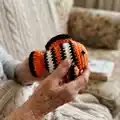
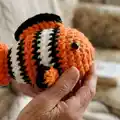
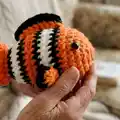
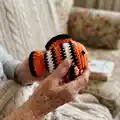
About This Clownfish (Nemo) Amigurumi Pattern
This pattern creates a small, striped clownfish (Nemo) amigurumi worked from the body up to the tail with no sewing required for the main body. It uses Super Bulky (Category 6) yarn and makes use of color changes to create the iconic orange, white, and black stripes. The pattern includes instructions for dorsal fins, placement of safety eyes, and finishing details to complete the toy.
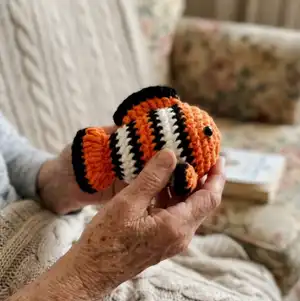
Perfect for crafters who enjoy quick amigurumi projects with clear color-change instructions. Includes materials, abbreviations, step-by-step rows, and fin construction details.
Why You'll Love This Clownfish (Nemo) Amigurumi Pattern
I absolutely love this pattern because it packs a lot of character into a small, quick project. The stripe color changes are fun and satisfying, giving a classic clownfish look without complex shaping. I enjoy how the body-up construction eliminates major sewing and keeps assembly simple and neat. The dorsal fins add a cute, handmade detail that brings the fish to life. Making several in different colorways is one of my favorite ways to personalize gifts.
Switch Things Up
I love experimenting with colors, and you can easily change the palette to create different species of fish or playful fantasy versions.
I often use lighter worsted yarn with a smaller hook to make mini keychain-size versions that are perfect for gifts.
I sometimes swap the safety eyes for embroidered eyes if the toy is intended for very young children to make it safer.
I like to add a little wire in the tail or fins for slight posability so the fish can 'swim' in different poses.
Try changing the stripe frequency: add extra white or black bands to create new stripe patterns and a unique look.
I enjoy adding small accessories like a tiny crocheted seaweed base or a bubble loop to hang the fish as a mobile.
To make a softer, squishier fish, use a bulkier yarn and larger hook, adjusting stuffing to achieve a plush finish.
If you want a sturdier toy, use tighter tension and firmly stuff the body before finishing the tail for better shape retention.
I sometimes embellish the fins with a thin contrasting border using slip stitch or surface crochet for a delicate outline.
For gift sets, I make a school of fish in complementing colors and varying sizes by switching yarn weight and hook — each one feels unique and handmade.
Common Mistakes & How to Fix Them
✗ Skipping stitch markers at the start of each round can cause you to lose track of your rounds; place a marker at the beginning of each round to maintain accurate counts.
✗ Not changing colors at the correct stitch can break the stripe pattern and make edges look messy; change yarn exactly where instructed and carry yarn neatly or fasten off between color bands.
✗ Forgetting to stuff at the indicated point will make closing the tail difficult and the shape uneven; follow the stuffing note at Row 17-18 and stuff gradually to achieve an even, firm shape.
✗ Pulling your stitches too tight when using Super Bulky yarn will make the amigurumi stiff and hard to work; keep a relaxed, consistent tension for nice drape and easier color changes.