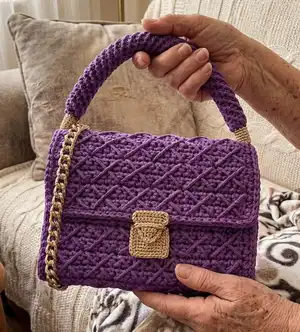
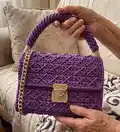
🧢 Beautiful ✨ Detailed πŸ’ Adorable

Canvas Handbag Pattern

Canvas Handbag Pattern
4.8β˜… Rating
8-10 Hours Time Needed
3.9K Made This
βœ‚οΈ

Intermediate Level

Ideal for those with basic crochet experience, featuring slightly more advanced stitches and techniques to expand your skills.

⏱️

All-Day Adventure

Requires 8-10 hours, ideal for a full day of immersive crocheting.

✨

Stylish Touch

An elegant detail to elevate any look, combining traditional techniques with contemporary design sensibilities.

About This Canvas Handbag Pattern

This pattern teaches you how to crochet a structured canvas handbag from polyester cord with a decorative embroidered lattice. You will create the flat canvas, add a base trim, embroider the diamond motif and sew side panels for a neat bag shape. The instructions include finishing tips, lining and assembly guidance for a professional result.

Canvas Handbag Pattern crochet pattern - detailed view of completed project

Perfect for intermediate crocheters who want to learn bag construction and surface embroidery. Includes clear step-by-step photos and practical finishing techniques.

Why You'll Love This Canvas Handbag Pattern

I absolutely love this pattern because it combines simple single crochet texture with elegant surface embroidery to create a high-end look from basic materials. I enjoy how versatile the design is β€” you can change cord color, hardware and lining to match your style. The construction teaches useful bag-making skills like base trimming, edge finishing and neat sewing of side panels. Every finished bag feels sturdy and beautiful, and I love gifting them because they look much pricier than the time invested.

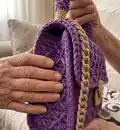
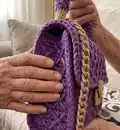
Canvas Handbag Pattern step 1 - construction progress Canvas Handbag Pattern step 2 - assembly progress Canvas Handbag Pattern step 3 - details and accessories Canvas Handbag Pattern step 4 - final assembly and finishing

Switch Things Up

I love swapping cord colors to make different moods β€” go monochrome for a chic minimalist bag, or choose a bright contrasting cord for the embroidery to make the lattice pop.

If you want a smaller or larger bag, change your cord thickness and hook size; a bulkier cord with larger hook will give you a chunky, quick-to-make version, while a thinner cord will produce a delicate small clutch.

I often replace the chain hardware with a leather strap or wrapped cord handle for a different look β€” try metal chain, leather, or even a crocheted padded handle.

For lining, pick printed cotton for a fun interior surprise or a coordinating linen to keep it elegant and durable β€” padding can be added for structure if you like a firm bag.

Make the embroidered motif denser or sparser: change the spacing of rows and columns to form larger diamonds or tighter lattice for a custom texture.

I sometimes add pockets inside the lining to make the bag more practical β€” stitch them before attaching the lining so everything sits cleanly inside.

Try decorative closures: instead of the shown snap or lock, use a magnetic snap, vintage clasp or a decorative button with a crocheted loop for personality.

Play with metallic cord or ribbon threaded through the embroidery lines to add shine and luxury to special occasion bags.

If you want a crossbody option, attach D-rings to the side panels and add a longer adjustable strap; for a top-handle bag, make a short padded handle and secure it with strong holders.

I always test a small swatch first to check tension and ensure the embroidered motif lines up; this helps avoid surprises when you reach the full canvas size.

Common Mistakes & How to Fix Them

βœ— Not pulling the working loop up to hook level when making SC creates holes in the canvas; pull your working loop to about 17-18 mm before tightening to keep the fabric dense and hole-free. βœ— Skipping stitch counting on long rectangular canvases leads to uneven edges; count stitches and rows regularly and place markers to maintain consistent stitch counts. βœ— Tightening seams too much during assembly will distort the shape of the bag; sew side parts with even tension and avoid over-pulling so seams lie flat without puckering. βœ— Leaving short ends during side panel finishing makes sewing difficult and messy; leave long sewing tails (about 60 in/1.5 m) and pull them to the wrong side as instructed for neat joining.

Canvas Handbag Pattern

Make a stylish, textured canvas handbag using polyester cord and simple crochet stitches. This pattern guides you through the full canvas, base trim, embroidery detail, side panels and assembly so you can create a professional-looking bag. Clear step-by-step instructions and photos make it approachable for makers with some crochet experience. Add hardware and lining to finish a beautiful handmade purse perfect for gifts or everyday use.

Intermediate 8-10 Hours

Materials Needed for Canvas Handbag Pattern

β€” Main Fabric

  • 01
    Polyester cord 3 mm, approximately 220 yards (200 m) - main material (example: Shikimiki Macrame Matte)
  • 02
    Optional soft flat cord 4 mm (alternative cord type)
  • 03
    Fabric for lining (cotton or linen), about 12x20 inches (30x50 cm)
  • 04
    Small amounts of contrasting cord for embroidery (optional), approx 4 m

β€” Tools Required

  • 01
    Crochet hook size 4 mm
  • 02
    Plastic needle with large eyelet
  • 03
    Sewing needle and thread for lining
  • 04
    Stitch markers (8 recommended)
  • 05
    Scissors
  • 06
    Lighter (for fusing cord ends)
  • 07
    Small Phillips screwdriver (for hardware)
  • 08
    2 snap hook O-rings or 2 D-rings (30-40 mm) for handles
  • 09
    2 holders for handle, diameter 14-16 mm
  • 10
    Chain 39-48 inches (1-1.2 m) with 2 snap hooks (optional for shoulder chain)
  • 11
    Any lock, 2x2 inches (5x5 cm)
  • 12
    Polyester stuffing (if making padded handles) - optional
  • 13
    Pins for assembly
  • 14
    Iron and damp cloth for steaming

Progress Tracker

0% Complete

β€” Canvas :

Info :

Crochet 26 CH.

Round 1 :

1 row. 25 SC from the 2nd loop from the hook on the back loop of the chain only, CH.

Round 2 :

2 row. 25 SC, CH.

Round 3 :

3 row. 25 SC, CH.

Info :

Cut the end of the beginning of the crocheting, process with fire.

Info :

From the 3rd row crochet the 1st SC on the legs of the last SC and skip the 1st loop of the row.

Round 4 :

4 row. 25 SC, CH.

Round 5 :

5 row. 25 SC, CH.

Round 6-66 :

6-66 rows. 25 SC, CH.

Round 67 :

67 row. 25 SC. Don’t cut the thread.

β€” Base trim :

Item Name (P1) :

Crochet 2 SC in the last SC of the 67th row.

Round 1 :

Next crochet 65 SC in the each row.

Round 2 :

Then 3 SC in 1.

Round 3 :

Next 23 SC.

Round 4 :

Then 3 SC in 1.

Round 5 :

Next 65 SC in the each row.

Round 6 :

Then 1 SC in the 1st SC of the 67th row. Cut the thread, insert the hook under 1st SC of the row, pull the thread. Tighten back in the last loop.

Round 7 :

Tighten the end through few loops, process with fire.

Round 8 :

Insert the hook in the any SC of the base trim. Pull the loop, insert the hook in the next SC, crochet SlSt.

Round 9 :

Next crochet SlSt in the each SC of the base trim.

Round 10 :

Cut the thread and pull out the end.

Round 11 :

Close the row: insert the hook under 1st SlSt of the row, pull the thread. Tighten back in the last loop. Tighten the ends through few loops, process with fire.

Info :

Now, after the base trim, the canvas consists of 68 rows.

β€” Embroidery :

Info :

Start embroidery from the top left corner.

Info :

The top is the future valve, where the crocheting of the fabric is finished (67th row).

Info :

Cut the thread about 4.4 yards (4 m) long, so there are fewer knots.

Info :

Insert the needle under the base trim. Count 4 rows and 4 SC and insert the needle between the 4th and 5th SC.

Info :

Insert the needle after 4th row again, then up under the base trim.

Round 1 :

Next embroider from left to right, down and right to left.

Round 2 :

Repeat rapport until the end of the canvas.

Info :

Don’t tighten the seams, but should not hang out.

Round 3 :

Tie the knot when the thread runs out. Then join the threads with the lighter.

Round 4 :

Hide the ends. Steam with the iron through a damp cloth.

Info :

Embroidery looks like squares on the wrong side.

β€” Side part(*2) :

Info :

Crochet 7 CH.

Round 1 :

1 row. 6 SC from the 2nd loop from the hook on the back loop of the chain only, CH.

Round 2 :

Insert the hook through the last SC. Over hook the end of the thread and pull out.

Round 3 :

Crochet in the end of the thread in the next row.

Round 4 :

Next crochet with the turning rows.

Round 5 :

2 row. 6 SC, CH.

Round 6 :

3 row. 6 SC, CH. From the 3rd row crochet the 1st SC on the legs of the last SC and skip the 1st loop of the row.

Round 7-21 :

4-18 row. 6 SC, CH.

Round 22 :

19 row. 6 SC, don’t cut the thread.

Round 23 :

Pull out the loop to the front side. Crochet 5 SlSt in the last row.

Round 24 :

Leave the end about 60 inches (1.5 m) long for sewing. Cut the thread, pull out the end. Pull out the end to the wrong side again.

Round 25 :

Similarly crochet the 2nd side part. Crochet the base trim with 5 SlSt in the other way.

Round 26 :

That’s, the ends of the side parts will be on opposite sides.

Round 27 :

Steam the side parts with an iron through a damp cloth.

β€” Assembly :

Round 1 :

Turn the side of the canvas to himself, where the additional row of the base trim.

Round 2 :

Count 10 rows (or 5 squares).

Round 3 :

Place the marker between the rows in the loop of the base trim.

Round 4 :

Then count 4 rows (or 2 squares). Place the markers between the rows. There should be 7 loops between the 1st and the 2nd markers.

Round 5 :

Count 10 rows (or 5 squares) again. Place the markers. It should be in the 19th loops from the 2nd markers.

Round 6 :

Also, count 19 loops from the 1st markers. Place the markers in the 19th loops on the rounding.

Round 7 :

Take the right side part. The side with the chain of the base trim with SlSt - front. The end of the thread on the left.

Round 8 :

Put on the corners of the side part to the canvas. Take the plastic needle.

Round 9 :

Make the securing stitches at the beginning. Next sew the side part with the canvas in each loop of the canvas and each row of the side part.

Round 10 :

Sew to the marker, remove, make the stitch in the corner.

Round 11 :

At down, sew 6 loops in the chain of the side part, make the 7th stitch in the knot.

Round 12 :

Remove the marker, make the stitch in the corner. Then sew to the next marker.

Round 13 :

Make securing stitches at the finish.

Round 14 :

Strengthen and hide the end, process with fire.

Assembly Instructions

  • Turn the canvas so the additional row of the base trim is facing you, count 10 rows (or 5 squares) and place a marker between rows in the loop of the base trim to mark the side panel placement.
  • Count 4 rows (2 squares) from the first marker and place a second marker; there should be 7 loops between the first and second markers to align the side panel correctly.
  • Align side part corners with the canvas and make securing stitches at the beginning; sew the side part to the canvas by stitching each loop of the canvas to each row of the side part using a plastic needle and long sewing tail.
  • At the bottom seam, sew 6 loops of the side part chain, make the 7th stitch into a knot to secure; remove marker and continue sewing to the next marker, repeat for the opposite side.
  • Make final securing stitches at the finish, strengthen and hide the ends and process the sewn ends with fire for fused cord finish.
  • Attach hardware (holders, O-rings, chain, and lock) after sewing and lining are installed according to the measurements and placement in photos and notes.

Important Notes

  • πŸ’‘Use stitch markers to mark placement for side panels and corners β€” this keeps the seams even and matching on both sides.
  • πŸ’‘Leave long sewing tails (about 60 inches / 1.5 m) for side panels to make sewing easier and neater when pulling ends to the wrong side.
  • πŸ’‘When finishing cord ends use a lighter carefully to fuse and trim; work in a ventilated area and avoid over-melting which can discolor cord.
  • πŸ’‘Steam embroidered canvas through a damp cloth to flatten and set stitches before assembly for a professional finish.

This canvas handbag pattern gives you a chic, structured bag with a decorative embroidered surface and professional finishing touches. Perfect for gifting or making a signature accessory, the pattern covers canvas, base trim, side panels and neat assembly. Try different cord colors, hardware and lining choices to make a bag that truly reflects your style. πŸ§Άβœ¨πŸ‘œ

You ask,

we answer.

FAQs

What size will the finished bag be?

The finished bag from the specified materials measures approximately length 8 5/8 inches (22 cm), height 7 1/2 inches (19 cm), width 2 5/8 inches (6.5 cm).

What yarn or cord should I use?

Use any polyester cord 3 mm (about 220 yards / 200 m). The designer used Shikimiki Macrame Matte; a soft flat 4 mm cord is an alternative.

How difficult is this pattern and how long will it take?

This is an intermediate pattern β€” you should be comfortable with single crochet and slip stitch, and expect about 8-10 hours to complete depending on experience and finishing time.

Do I need to line the bag and how much fabric is required?

Yes, lining is recommended; use cotton or linen about 12x20 inches (30x50 cm) and sew it in after assembly for a neat interior.