🧢 Beautiful ✨ Detailed πŸ’ Adorable

60 Macrame Knots & Knot Patterns Pattern

60 Macrame Knots & Knot Patterns Pattern
4.5β˜… Rating
12-15 Hours Time Needed
2.0K Made This
βœ‚οΈ

Beginner Friendly Level

Perfect for those just starting their crochet journey, with clear instructions and simple techniques

⏱️

Multi-Day Project

A rewarding 12+ hour journeyβ€”perfect for dedicated crafters who love detailed work.

🏑

Cozy Accent

A warm touch for your space that transforms ordinary corners into inviting nooks filled with handmade charm.

About This 60 Macrame Knots & Knot Patterns Pattern

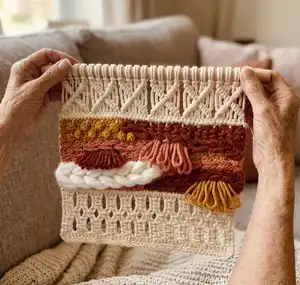
This pattern collection teaches 60 macrame knots and knot patterns with step-by-step instructions and photos. Youll learn mounting knots, square knots, half hitch variations, braids, and finishing techniques for projects. Each knot includes clear steps so you can practice and apply them directly to wall hangings and home decor.

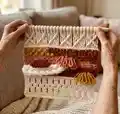
60 Macrame Knots & Knot Patterns Pattern crochet pattern - detailed view of completed project

Perfect for beginners and makers who want to expand their knot vocabulary and design options. Use these knots to add texture, color, and structure to all your macrame projects.

Why You'll Love This 60 Macrame Knots & Knot Patterns Pattern

I absolutely love this pattern because it organizes a huge variety of macrame knots into one easy-to-follow reference that I can use again and again. I enjoy how each knot is demonstrated with clear photos and concise steps so I can learn visually and practically. I love that the mix of basic and slightly more advanced techniques lets me build skills gradually while creating beautiful pieces. I feel proud when I use these knots in my own wall hangings and plant hangers, and I hope you will feel the same joy as you practice and create.

60 Macrame Knots & Knot Patterns Pattern step 1 - construction progress 60 Macrame Knots & Knot Patterns Pattern step 2 - assembly progress 60 Macrame Knots & Knot Patterns Pattern step 3 - details and accessories 60 Macrame Knots & Knot Patterns Pattern step 4 - final assembly and finishing

Switch Things Up

I love how many creative variations you can make by swapping cord thickness and color: try a mix of natural 4 mm cotton with a single bright accent cord to make patterns pop.

Want a chunky look? Use a thicker 6 mm cord and larger dowel β€” the knots will look bolder and the finished piece more sculptural.

For delicate pieces, use thin 3 mm cords and tighter spacings; this creates a lacy, intricate texture perfect for smaller wall art.

I often alternate rows of square knots with diagonal double half hitch rows to create movement β€” experiment with the order of knot rows to change the flow of your design.

Try combining wrapping knots with a contrasting color to highlight the gathered section and add a professional finish to plant hangers and tassels.

If you want more structure, insert a metal ring or wooden dowel in the middle of a piece and attach radial cords using lark's head knots for a framed motif.

I sometimes add beads to the working cords before tying square knots for a playful accent β€” slide them on and secure their position with a locking knot.

To make a symmetrical design, always count filler cords and plan half patterns on each side; I sketch the layout before cutting cords to avoid surprises.

If you want more texture, leave some filler cords unknotted and brush them out with a comb for a soft fringe effect β€” it adds a boho feel instantly.

Don’t be afraid to test variations on scrap cords; I keep a small sample board where I try color combos and knot sequences before committing to a full-size piece.

Common Mistakes & How to Fix Them

βœ— Not measuring cord length accurately leads to running out of cord mid-project; calculate and add extra length before you start and test with a small sample. βœ— Using inconsistent tension causes uneven knots and lines; practice keeping a steady pull and check your spacing as you go to maintain uniformity. βœ— Skipping a practice knot before tying a row results in messy joins; always test a sample knot to make sure you understand the direction and placement. βœ— Failing to secure ends during wrapping knots can cause sloppy finishes; tuck and trim the short tail carefully and use a final tuck to lock it in place. βœ— Attaching cords without planning filler and working cords wastes cord length; plan which cords will be working vs filler before tying multiple rows.

60 Macrame Knots & Knot Patterns Pattern

This comprehensive macrame knot pattern guide walks you through 60 essential knots and variations so you can create beautiful wall hangings, plant hangers, and decor. Youll learn step-by-step techniques with clear photos and easy-to-follow directions to build your confidence. Whether youre just starting or expanding your skill set, this pattern collection gives you practical tips and creative inspiration for handmade projects.

Beginner Friendly 12-15 Hours

Materials Needed for 60 Macrame Knots & Knot Patterns Pattern

β€” Main Fabric

  • 01
    3 mm cotton cord, natural - multiple lengths (individual pieces 2-4 m each depending on project size)
  • 02
    4 mm cotton cord, natural - for medium projects and wall hangings (several multiples, approx 200-400g total)
  • 03
    5-6 mm braided cotton cord, natural - for chunky textures and bold rows (approx 200-300g)
  • 04
    Accent cotton cord (2-3 mm) in color - small amounts for contrast wraps and vertical DHHK (50-150g)
  • 05
    Optional waxed cotton or polyester cord for durable plant hanger sections - small quantities

β€” Tools Required

  • 01
    Dowel, driftwood, or metal ring for mounting (length depends on project)
  • 02
    Sharp scissors
  • 03
    Tape measure or ruler
  • 04
    Comb or brush for fringing
  • 05
    T-pins or sewing pins for holding cords while working
  • 06
    Yarn needle or tapestry needle for weaving ends
  • 07
    Clamps or binder clips to secure the dowel while working
  • 08
    Marker or pencil to mark spacing on dowel

Progress Tracker

0% Complete

β€” Section 01 - Basic Knots :

01 Lark's Head Knot :

The lark's head knot is the most common mounting knot you'll use in macrame. You can use it to attach cords to a dowel or a piece of driftwood, metal or wood rings, or another piece of cord.

Info :

Fold your cord in half, and place the looped in over your dowel (or whatever you're attaching it to).

Info :

Bring the ends of the cord through the loop and tighten it up to secure.

02 Cow Hitch Knot :

The cow hitch knot is done the same way as the lark's head knot, but in reverse.

Info :

Fold your cord in half, and place the looped in over your dowel (or whatever you're attaching it to).

Info :

Bring the ends of the cord through the loop.

Info :

Pull the ends to tighten the loop. The cow hitch sits slightly differently than the lark's head.

03 Square Knot :

The square knot is one of the most important basic macrame knots you'll learn. The two outside (working) cords will use a lot more cord than the filler cords, so plan accordingly. Here's how to make a left facing square knot. (To make a right facing one, you do the same thing in reverse.)

Step 1 :

Cross the left cord across the center cords and behind the right cord.

Step 2 :

Bring the right cord behind the center cords and pull the end through the loop on the far left.

Step 3 :

Pull the ends to tighten. This is half of the square knot.

Step 4 :

Bring the right cord in front of the center cords.

Step 5 :

Bring the left cord behind the center cords and pull the end through the loop on the far right.

Step 6 :

Tighten and the square knot is complete.

04 Half Hitch Knot :

The half hitch knot is another important basic macrame knot. It's half of the even more important double half hitch knot (which we'll learn next). This is how to make a half hitch knot going to the right. (To make one going to the left, it's the same, but in reverse.)

Step 1 :

Bring the left cord over the right cord in an L shape.

Step 2 :

Bring the left cord around the right cord and pull the end through the loop.

Step 3 :

Tighten it as much as you want for your design.

05 Double Half Hitch Knot (Clove Hitch) - L to R Horizontal :

The horizontal double half hitch knot can be a little tricky at first, but it's a very important knot to learn. Here's how to make horizontal double half hitch knots from left to right.

Step 1 :

Hold the left cord in front of the other cords in an L shape. This will be the filler cord.

Step 2 :

Bring the next cord over up and around the filler cord to make a half hitch knot.

Step 3 :

Pull the end of the cord to tighten.

Step 4 :

Repeat that again with the same cord.

Step 5 :

Tighten up the knot.

Step 6 :

Repeat across the row with each cord.

Double Half Hitch Knot - R to L Horizontal :

To make double half hitch knots from right to left, it's the same process, just reversed.

Double Half Hitch Knot - Diagonal :

Making diagonal double half hitch knots is the same as doing them horizontally, but you hold the filler cord at the angle you want your knots to go.

06 Vertical Double Half Hitch Knot (VDHHK) :

The vertical double half hitch knot is used a lot of times to add a pop of color to macrame wall hangings. Here's how to tie a row of vertical double half hitch knots to the right.

Step 1 :

Hold the short end of a piece of cord behind and to the left of the first two filler cords. The right side of this cord is much longer.

Step 2 :

Bring the right end of the cord in front of and then around the filler cords.

Step 3 :

Tighten up the cord.

Step 4 :

Hold the right side of the cord with your finger and cross the right end of the cord in front of the filler cords. Wrap the end around and bring it through that loop you're holding.

Vertical Double Half Hitch Knot - Continued :

Here's how to continue tying a row of vertical double half hitch knots to the left.

Step 1 :

Cross the working cord behind the filler cord and hold the loop. Then bring the end around in front and through the loop.

Step 2 :

Tighten up the knot.

Step 3 :

Pull the working cord around to the left.

Step 4 :

Cross the end of the working cord in front of the filler cords, holding the loop. Bring the ends through the loop.

07 Vertical Lark's Head Knot (VLHK) :

The vertical lark's head knot is a handy knot to know. The top row shows how to make a right facing vertical lark's head knot, and the bottom row shows how to make a left facing vertical lark's head knot.

Step 1 :

Wrap the ends of the cord up and across itself to make a circle. Bring the end behind and through the loop.

Step 2 :

Pull the ends to tighten up the knot.

08 Overhand Knot :

The overhand knot is one of the most basic knots there is. It's super useful for macrame and just about anything that involves a knot!

Step 1 :

Make a simple loop with the cord and bring the end around and through the loop.

Step 2 :

Pull the ends to tighten the overhand knot for a simple stopper knot.

09 Wrapping Knot :

The wrapping knot is commonly used to finish plant hangers or anything that needs to be gathered and secured. It's a very handy knot to know. I use it all the time!

Step 1 :

Hold a piece of cord in front of the cords you want to wrap.

Step 2 :

Hold it in a U shape, with the short side on the left.

Step 3 :

Start wrapping with the long end, making sure the short left side is sticking out of the top.

Step 4 :

Continue wrapping until it's the length you want. Make sure you don't go past the loop at the bottom.

Step 5 :

Bring the end you've been wrapping with through the loop.

Step 6 :

Pull the short cord at the top to pull the loop halfway up the wrapped section.

Step 7 :

The two ends will be sticking out of the top and bottom. Cut them close to the wraps and use the end of your scissors to poke the ends up under the wraps to hide them.

10 Extended Lark's Head Knot :

The extended lark's head knot is a good way to add some extra space between your cords.

Step 1 :

After you attach the cord to your dowel with a lark's head knot, take the right cord and bring it behind and over the dowel.

Step 2 :

Bring the end of the cord down through the loop and tighten.

Step 3 :

Do the same thing on the left side.

11 Double Lark's Head Knot :

If you want to attach a piece of cord to your dowel on both ends, leaving a loop of cord in the middle, this is how to do it. This is a great way to add extra fringe to your wall hangings, just attach each piece of fringe to the swag of cord using lark's head knots.

Step 1 :

After attaching the cord to the dowel, take the right side and hold it in front of the dowel.

Step 2 :

Bring the end over and pull it through the loop and tighten it up.

12 Crossed Lark's Head (Version 1) :

This is a fun way to jazz up your lark's head knot a little bit. It still functions the same way as a regular lark's head, but it adds a little more detail and texture.

Step 1 :

Attach your cord with a lark's head knot, but pull out the loop a bit.

Step 2 :

Twist the loop 180 degrees clockwise, so it twists.

Step 3 :

Pull the loop up and over the dowel.

Assembly Instructions

  • Mount your dowel or driftwood securely at working height and space your lark's head attachments evenly before tying the first row to ensure symmetry.
  • When adding vertical color rows (VDHHK), plan the long working cord length and secure the short tail behind filler cords to avoid uneven rows.
  • For wrapped finishes, wrap the long tail neatly and tuck the short end up through the loop before tightening, then trim and hide ends under the wraps.
  • Use pins or clips to hold knotted rows in place while tying adjacent knots so your design stays even and your tension remains consistent.

Important Notes

  • πŸ’‘Measure and cut generous cord lengths before starting β€” it's easier to trim excess than to add more later.
  • πŸ’‘Keep a consistent tension across each row to avoid waves or uneven spacing in your finished piece.
  • πŸ’‘Practice each knot a few times on scrap cord before committing to your final project to ensure familiar technique and clean results.

This thoughtful collection of macrame knots gives you 60 versatile techniques to build beautiful handmade decor. Use it to create wall hangings, plant hangers, and textured accents for any room. Practice the basics, then mix and match knots to design unique pieces you will treasure. 🧡🌿

You ask,

we answer.

FAQs

What size cord should I use for macrame wall hangings?

Common cord sizes for wall hangings are 3 mm to 6 mm cotton cord. Thinner cords give fine detail while thicker cords provide chunky texture. Choose a size that suits your design and adjust cord quantities accordingly.

How much cord do I need for a typical wall hanging?

Cord requirements vary widely with design, but a general rule is to cut each working cord at least 4 times the finished length and add extra for fringe and wraps. Plan generously to avoid running short.

Can beginners learn these knots easily?

Yes, this guide starts with basic knots and builds up gradually. Beginners can follow the step-by-step photos and practice each knot on scrap cord until they feel comfortable.

How long will it take to complete a macrame project using these knots?

Project time varies by size and complexity; small projects can take a few hours while larger wall hangings may take 12-15 hours or more. Practice speeds up the process.