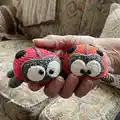
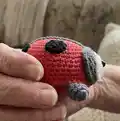
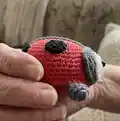
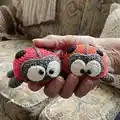
About This Ladybug Amigurumi Pattern
This pattern creates a small, adorable ladybug amigurumi using DK cotton yarn and a 2.0 mm hook. It includes step-by-step rounds for the belly, back, muzzle, eyes, paws and spots, plus clear assembly instructions. The design is compact and photo-referenced so you can match the finished shape as you go.
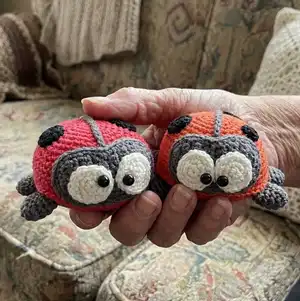
Perfect for gifting or keeping as a sweet handmade accent, the ladybug measures approximately the same size shown when made with the recommended materials. Detailed tips and finishing notes are included to help you achieve a neat, professional look.
Why You'll Love This Ladybug Amigurumi Pattern
I absolutely love this pattern because it turns simple stitches into a playful, three-dimensional character with personality. I enjoy how compact the design is—it's quick to make yet satisfying to complete. The construction teaches thoughtful joining and finishing that improve amigurumi technique. I also love how customizable it is: swap colors, change eye types, or add accessories to personalize each ladybug.
Switch Things Up
I love to change the color palette when I make this ladybug; try soft pastels for a nursery-safe version or neon shades for a modern twist.
You can easily change the size by swapping yarn weight and hook size; bulky yarn with a larger hook makes a chunky cuddle friend while fine yarn makes a tiny keychain version.
I often replace the bead eyes with embroidered eyes for a child-safe toy, or add safety eyes if the recipient is not for very young children.
Try making different spot arrangements: vary the number and size of spots to give each ladybug its own personality.
Add tiny accessories like a crocheted bow, scarf, or a little hat to make seasonal or gift-ready versions.
For a posable version, I sometimes add thin wire to the limb cores before sewing to allow slight posing of the paws.
Experiment with texture by using a boucle or a slightly fuzzy cotton to give the shell a soft, tactile surface.
I also enjoy creating sets in complementary colors to display as a collection—try three sizes with coordinating palettes.
Make them magnetic by sewing a small flat magnet inside the belly if you want fridge decorations; secure well and warn gift recipients about magnets.
When sewing on the muzzle and eyes, I pin and baste lightly first to adjust placement until the face looks right—this small step makes a big difference in the final expression.
Common Mistakes & How to Fix Them
✗ Crocheting too loosely can create holes where stuffing shows through; use tighter tension or a smaller hook to close gaps.
✗ Forgetting to count stitches after increases or decreases leads to uneven shaping; count at the end of each round and place a marker to track the start.
✗ Not stuffing gradually makes the body lumpy and hard to shape; add stuffing in small increments while you crochet around the opening.
✗ Skipping the joining step details when connecting belly and back can distort the seam; follow the step-by-step join method and insert the hook through both loops for an even edge.
✗ Cutting threads too short before sewing parts together makes finishing difficult; leave enough tail for stitching and weaving in ends to secure pieces neatly.