About This French Countryside Blanket Pattern
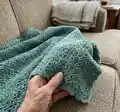
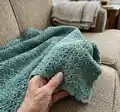
This pattern makes a medium-sized textured blanket worked in the Paris Stitch to create a light, lacy but cosy fabric. It uses DK / Light (3) yarn and a 4.5mm hook and includes full instructions for the body and a two-round border. The design is easy to customise for different widths and lengths using the included tables and suggestions.
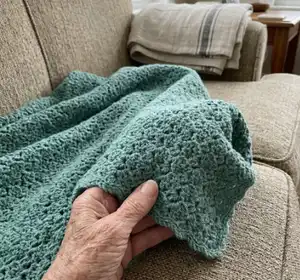
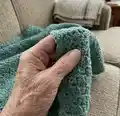
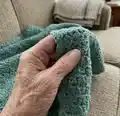
The Paris Stitch (2 dc, ch2, sc) gives a pretty repeating motif that is quick to learn and soothing to crochet. Detailed photo guidance and border instructions are included to help you place stitches and corners correctly.
Why You'll Love This French Countryside Blanket Pattern
I absolutely love this pattern because the Paris Stitch is so addictive and it creates a beautiful texture without complicated stitchwork. I enjoy how the stitch looks intricate but is actually incredibly relaxing to make row after row. The pattern is flexible, so I can change the size easily using the starting chains table or make a matching baby or throw size. I also love that the border instructions are very clear, helping the finished blanket look professional and neat.
Switch Things Up
I love how easy it is to customise this pattern by changing yarn colorways — you can swap the Seafoam Green for pastel shades, bold stripes, or self-striping yarn to create very different looks.
I often change yarn weight and hook size to make different sizes: use bulky yarn and a larger hook for a chunky cosy throw, or thin yarn and a smaller hook to make a delicate baby blanket.
You can alter the border: try a wider scalloped edge, a picot round, or a contrasting colour for the Paris Stitch round to make the edge pop.
I sometimes add tassels or crochet pom-poms to the corners for a playful finish, which also gives the blanket a handmade boutique feel.
If you prefer a firmer fabric, swap to an acrylic-cotton blend; for extra drape and luxury, choose a soft merino blend instead — just make a swatch to check gauge.
Want a striped blanket? Change colours every 10-20 rows for wide stripes, or every 2-3 rows for narrow stripes — both look great with the Paris Stitch texture.
I like to make a matching set by crocheting a cushion cover using the same stitch pattern and border, creating a coordinated home décor set.
If you want a very portable project, make a mini version with fingering yarn and a small hook for a sweet keyring-sized square using the same stitch repeat.
I sometimes embroider simple motifs onto the finished blanket or tack-on a crochet applique for personalization, especially if making the blanket as a gift.
Don't be afraid to experiment with subtle stitch changes like substituting the sc in the Paris Stitch with a hdc for a slightly different texture — always swatch first to check how the change affects gauge and drape.
Common Mistakes & How to Fix Them
✗ Starting the wrong number of chains can change your blanket width drastically; check the Table 1 multiples (multiple of 4 + 2) and select the closest starting chain number for your desired width.
✗ Skipping the turning chain or miscounting the turning chain can distort the edge stitches; always work the indicated dc around the turning chain as specified so your edges remain even.
✗ Using a different yarn weight without adjusting hook and checking gauge will alter final size; make a swatch first and adjust hook size to match the gauge specified in the pattern.
✗ Placing Paris stitches in the wrong side spaces will make the border uneven; follow the photo guidance and place Paris stitches in the small spaces indicated, counting carefully (it usually works out as 1 Paris stitch for every 2 rows on the left side).